In the late nineteenth and early twentieth centuries, the worlds of psychology and ceremonial magic began to intertwine in surprising ways. Psychology was a young science, exploring the hidden layers of the mind, while modern occultists were experimenting with rituals, symbols, and altered states of consciousness. Both sought to understand the unseen forces shaping human experience.
For magicians, these forces were often spiritual or cosmic. For psychologists, they were unconscious drives and archetypes. Yet both perspectives spoke to the same need: to uncover what lies beneath ordinary awareness. Thinkers like Freud and Jung built frameworks for exploring the psyche, and occultists quickly recognized that these insights could also explain magical experiences. This shared curiosity opened the door for dialogue between the two fields.
How the Shift From External to Internal Experiences Reshaped the Occult
Earlier traditions of magic often described external phenomena—spirits appearing, objects moving, or visions in the physical world. By the modern era, focus shifted inward. Experiences of magic became more subjective, often taking place within dreams, imagination, or states of trance.
This change didn’t make magic less meaningful. Instead, it emphasized the mind as the true stage where magical events unfold. Occultists began to see rituals, symbols, and myths as tools to access deeper layers of the self.
Psychology reinforced this view by showing how inner experiences could shape personal reality. What once seemed supernatural was now understood as both mystical and psychological, reshaping how people practiced and valued ceremonial magic.
The Power of Will: Philosophers Who Laid the Groundwork
Arthur Schopenhauer placed the concept of Will at the center of human existence. For him, Will was not just a personal drive but the fundamental force behind life itself. He described it as stronger than thought, shaping both nature and human behavior. This idea broke away from purely rational explanations of the world and emphasized deeper, instinctive powers guiding human action.
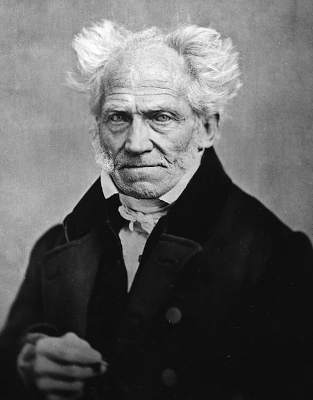
Schopenhauer’s influence was profound. His works resonated with early psychologists, especially Freud and Jung, who explored hidden drives within the psyche. By connecting philosophy with Eastern traditions such as Hinduism and Buddhism, Schopenhauer also opened Western thought to ideas of transcendence, suffering, and liberation. His vision of Will provided a philosophical foundation for later occultists who saw personal will as the key to magical practice.
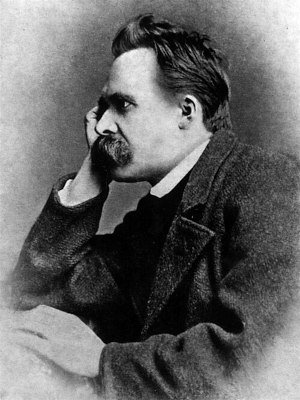
Friedrich Nietzsche expanded Schopenhauer’s ideas with his concept of the will to power. Instead of seeing Will as simply the root of existence, Nietzsche argued that life itself is the expression of a constant drive to grow, dominate, and create. This idea was radical because it cast existence as dynamic and ever-changing, propelled by human striving.
For occult thinkers, Nietzsche’s philosophy carried mystical implications. The “will to power” could be seen as a path to self-overcoming, where individuals shape their own destiny through strength, creativity, and inner transformation. This echoed the magical goal of aligning with one’s True Will—a central idea that later became crucial to ceremonial magic.
Nietzsche’s challenge to tradition, his embrace of myth, and his call for a “new nobility” deeply influenced both psychology and esoteric movements, leaving a legacy that continues to inspire seekers of hidden wisdom.
Nature, Spirit, and Symbols: The Influence of German Romanticism
German Romanticism gave rise to Naturphilosophie, a way of seeing nature as alive, interconnected, and infused with spirit. Rather than treating the natural world as a collection of separate parts, philosophers like Fichte, Schelling, and Hegel envisioned it as a living system woven together by hidden correspondences. In this view, nature held a mythical history, mirrored human consciousness, and revealed a spiritual order waiting to be decoded.
This holistic perspective was inspired by classical antiquity, revived by thinkers and artists who sought meaning beyond the rationalism of the Enlightenment. The rediscovery of Greek and Roman art and myth fueled the Romantic imagination, turning nature into a sacred text filled with symbols. For many, to study nature was to study the divine.
How Romantic Ideals Inspired Later Psychological and Occult Thought
These Romantic ideals deeply influenced both psychology and modern magic. By stressing the unity of spirit and matter, they prepared the ground for the idea that the psyche itself could be sacred. Carl Jung, for example, drew heavily on Romantic notions when developing his theories of archetypes and the collective unconscious, linking the human mind to universal myths and symbols.
For occultists, Romanticism reinforced the belief that rituals, myths, and symbols were more than imaginative tools—they were gateways to hidden truths. The sense that the world was alive with meaning inspired esoteric traditions to view every image, number, or pattern as part of a greater spiritual code. This worldview shaped the foundations of modern ceremonial magic, where nature and psyche are seen as mirrors of one another, both woven into a vast web of mystery.
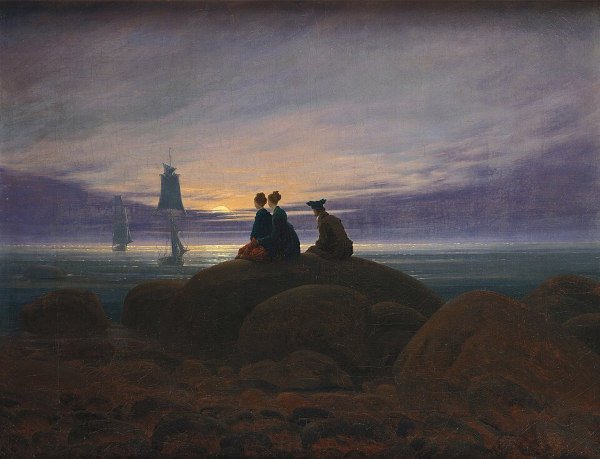
Moonrise by the Sea
Carl Jung: The Bridge Between Psyche and the Sacred
Carl Jung was not only a pioneering psychologist but also a man fascinated by the mystical. Throughout his life, he reported personal experiences with dreams, visions, and paranormal phenomena. These encounters shaped his belief that the unconscious was more than a storehouse of repressed memories—it was a living reality with its own autonomy.
Jung’s charisma and eclectic style attracted followers who treated him almost as a spiritual teacher, and over time, a kind of personality cult formed around his ideas. His openness to mythology, alchemy, and even astrology set him apart from Freud, placing him at the crossroads of psychology and esotericism.
Archetypes, the Collective Unconscious, and Their Magical Resonance
At the heart of Jung’s theories were archetypes and the collective unconscious. He argued that beneath personal experiences lies a deeper layer of the psyche, shared by all humanity. This collective unconscious holds primordial images—archetypes—that surface in dreams, myths, and rituals. Because these archetypes are symbolic, Jung used methods like dream analysis and active imagination to explore their meaning.
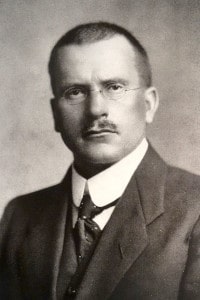
For practitioners of ceremonial magic, these concepts were revolutionary. Rituals, symbols, and myths could now be understood as expressions of archetypes that connect the individual to something universal. Magic, in this sense, became a way of engaging with the unconscious and channeling its transformative power. The psychological and the mystical were no longer separate but woven together through Jung’s vision of the psyche.
How Jung’s Ideas Fueled the New Age and Beyond
Jung’s influence extended far beyond psychology. His work inspired occultists like Dion Fortune and Israel Regardie, who blended his theories with magical practice. Later, his ideas became central to the New Age movement, which embraced the sacralisation of the psyche—the idea that the human soul itself is divine.
By interpreting the self as a “spiritual sun,” Jung provided a foundation for modern spiritual seekers to see inner growth as a sacred journey. His emphasis on individuation—the process of becoming whole—resonated with both therapists and magicians who saw transformation as the ultimate goal. From psychotherapy rooms to esoteric circles, Jung’s legacy continues to bridge the scientific study of the mind with the timeless quest for spiritual meaning.
Related reading: The Evolution of Modern Western Magic: From Ancient Mysticism to Today’s Spiritual Path – Opens in new tab
Dion Fortune: Psychology Meets the Inner Planes
Dion Fortune, born Violet Firth, began her career in psychology before stepping fully into the world of the occult. Trained in psychoanalysis at the Medico-Psychological Clinic in London, she lectured on concepts like repression and complexes, making the workings of the mind accessible to her audience. Yet, she soon found psychology alone too limited to explain certain experiences she encountered in her practice.
This curiosity led her into Theosophy and eventually into the Hermetic Order of the Golden Dawn, where she embraced ritual magic and trance work. For Fortune, psychology and magic were not opposing disciplines—they were two sides of the same coin, each revealing different dimensions of the human psyche.
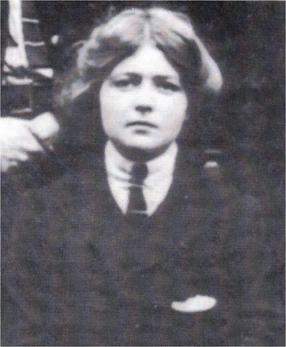
Fortune cleverly used fiction to communicate occult teachings. Works like The Sea Priestess and Moon Magic (Aff.links) were more than romances; they carried layers of esoteric instruction. Through characters and stories, she wove in psychological principles such as the anima-animus dynamic, offering readers both entertainment and subtle initiation.
She even suggested that reading these novels could act as a therapeutic exercise, allowing readers to identify with characters and experience psychological healing through imagination. In this way, her fiction doubled as a form of guided esoteric psychology.
The “Inner Planes” and the Mystical Power of Polarity
One of Fortune’s most distinctive contributions was her teaching on the “inner planes.” She described these as subtle dimensions of existence that could be accessed through ritual, meditation, and symbolism, and she often mapped them onto the Qabalistic Tree of Life. For her, these planes were not abstract—they were the living foundation of magical practice. Working within them allowed the magician to influence outer reality through inner transformation.
Fortune also emphasized the spiritual power of polarity, particularly the balance between male and female energies. She believed the cosmos itself was structured through these polar forces—sun and moon, light and dark, active and passive. In her eyes, true magical work came from harnessing and harmonizing these opposites. This vision of polarity not only shaped her teachings but also left a lasting legacy in modern pagan witchcraft, where the sacred balance of feminine and masculine continues to be celebrated.
Israel Regardie: Healing Through Magic and Psychology
Israel Regardie’s journey into magic began with his fascination for Aleister Crowley. Captivated by Book Four (Aff.link), he even worked briefly as Crowley’s secretary, though their relationship was never that of formal master and student.
Unlike many who followed Crowley into purely esoteric territory, Regardie turned toward psychology to ground his spiritual search. He studied Reichian therapy, earned a degree in psychology, and later a doctorate, blending modern psychotherapy with the occult wisdom he had absorbed from Crowley and the Golden Dawn tradition.
Regardie saw ceremonial magic not as superstition but as a form of inner healing and development. In his eyes, magical rituals were powerful methods of aligning the conscious and unconscious mind. His landmark work, The Middle Pillar (Aff.link), offered practical techniques that resembled analytical psychology in their approach to integration and wholeness.
By presenting magic in psychological terms, he made it more accessible to modern seekers. For Regardie, magic was ultimately a tool for personal transformation—a way of unlocking the full potential of the self.
Why Regardie Insisted Students Undergo Therapy Before Occult Work
Regardie believed that psychological health was essential before pursuing serious occult study. He argued that students unprepared for the demands of magical practice risked confusing inner turmoil with spiritual experience. To avoid this, he insisted that anyone approaching the Great Work should first undergo psychotherapy. Therapy provided a common frame of reference, a safe foundation on which the challenging work of self-discovery and magical exploration could be built.
This blending of psychology and magic distinguished Regardie from many of his contemporaries. His insistence on healing before initiation revealed his conviction that true spiritual growth must rest on emotional clarity and psychological stability. In this way, he helped transform the practice of ceremonial magic into not just a mystical pursuit, but also a practical path of self-care and human development.
Aleister Crowley and the Philosophy of True Will
Aleister Crowley redefined the idea of Will in ways that shook both the occult world and broader culture. Drawing inspiration from philosophers like Schopenhauer and Nietzsche, he taught that the highest law of life was: “Do what thou wilt shall be the whole of the Law.”
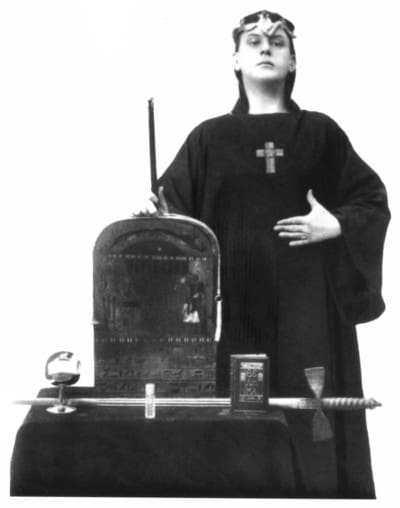
For Crowley, this did not mean reckless indulgence. Instead, it referred to discovering and following one’s True Will—the unique purpose or path each person is meant to live. In this sense, Will was not mere desire but the deepest inner drive that aligns with the flow of the universe.
This radical reinterpretation transformed Will into a spiritual compass. It became the foundation of his magical philosophy, Thelema, where every act of ritual or discipline was directed toward uncovering and living in harmony with one’s True Will. By elevating Will above dogma, tradition, or morality, Crowley placed the responsibility of spiritual growth squarely on the individual.
Magic as Self-Discovery and Mastery of Nature
For Crowley, magic was never simply about commanding spirits or producing supernatural phenomena. He defined it as “the science and art of causing change to occur in conformity with Will.” In other words, magic was a disciplined practice of aligning the self with cosmic forces. Through ritual, meditation, and symbolic work, the magician learned to harness inner energies and direct them toward transformation.
This approach cast magic as a process of self-discovery. By stripping away illusions and confronting inner shadows, the practitioner gained mastery over the self—and by extension, over nature itself. Crowley’s vision turned magic into a path of personal evolution, where uncovering one’s True Will meant participating fully in the creative power of existence.
It was a philosophy that bridged ancient occult practices with modern psychological insight, leaving a legacy that continues to influence both esoteric traditions and contemporary spirituality.
Magic, Psychology, and the Language of Symbols
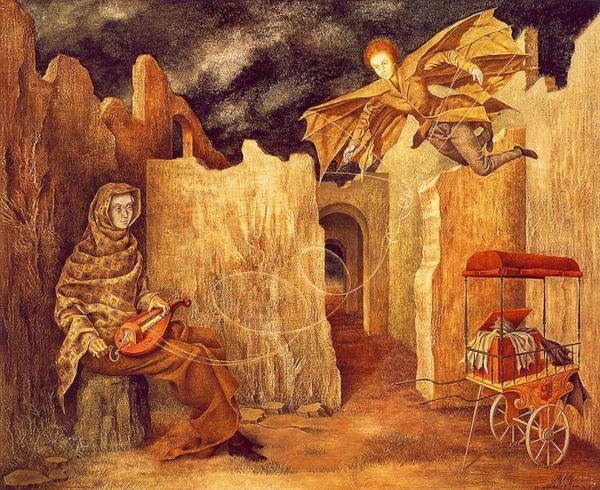
In both ceremonial magic and psychology, symbols act as keys to the hidden layers of the psyche. Carl Jung’s theories of archetypes and the collective unconscious gave a powerful framework for understanding why rituals resonate so deeply. When magicians use names, images, or sacred patterns, they are not merely performing theatrics. They are calling forth archetypal forces that exist in the shared human unconscious. Ritual, then, becomes a bridge between the conscious self and the universal patterns that shape human experience.
Why Symbols Awaken Hidden Powers
Symbols hold the ability to bypass rational thought and speak directly to the unconscious. A sigil, a myth, or a ritual gesture can activate inner processes that words alone cannot reach. This is why both magicians and psychologists view symbols as transformative tools. In magic, symbols are used to awaken dormant energies, while in psychology they can reveal repressed memories or deeper truths about the self. As Israel Regardie once explained, “By names and images are all powers awakened and reawakened”—a reminder that symbolic language stirs forces that lie just beneath awareness.
The Blurred Line Between Imagination and Reality
One of the most intriguing aspects of modern magic is its embrace of imagination as a real force. What begins as an inner vision, a dream, or a trance experience can take on an undeniable sense of reality for the practitioner. Starhawk, a modern witch and author, described trance as both subjective and objective—a continuum where personal imagination merges with shared energetic currents. From this perspective, imagination is not dismissed as fantasy but honored as a doorway to deeper truths.
Psychology often interprets these experiences as projections of the mind, while occultists see them as genuine encounters with unseen forces. The line between the two is intentionally blurred. For many practitioners, the value lies not in whether an experience is “literally real” but in the transformation it produces. Magic and psychology meet here, in the recognition that inner images have the power to reshape outer lives.
Related reading: The Enchantment That Never Died: How Magic Adapted to a Rational World – Opens in new tab
The Question of Validity: Are Magical Experiences “Real”?
Modern psychology often explains mystical or magical encounters as projections of the mind. Gods, spirits, or metaphysical beings are interpreted as archetypes or symbolic creations of the unconscious. This view, rooted in thinkers like Feuerbach and later Freud, reframes the divine as something generated by human imagination. In contrast, occult traditions frequently treat these experiences as encounters with independent realities. For practitioners like Dion Fortune, the psyche was not simply creating illusions—it was a gateway to genuine spiritual dimensions.
Shared Experiences in Trance and Ritual
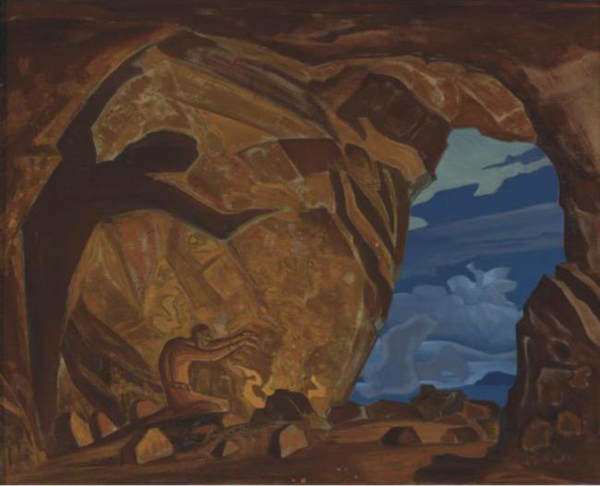
One way practitioners test the validity of magical experience is through shared states of consciousness. During rituals or trance, multiple participants may report perceiving the same symbols, presences, or visions. These collective experiences blur the line between subjective imagination and objective reality. As Starhawk observed, trance can move along a continuum—partly personal, partly communal. This overlap gives such practices their compelling sense of authenticity, regardless of whether psychology labels them projection.
How Belief Shapes Reality
Belief itself plays a central role in determining the impact of magical practice. If a vision, dream, or ritual produces real change in a person’s life—healing, insight, empowerment—then for the practitioner it is undeniably real. Psychology and magic converge on this point: inner experiences, whether explained as unconscious processes or metaphysical encounters, shape behavior and perception. What begins in the imagination can ripple outward, altering how individuals understand themselves and the world. In this sense, the power of belief transforms the question of validity from “Is it real?” to “What does it do?”
Conclusion: A Shared Journey of Inner Discovery
The meeting point of psychology and ceremonial magic reveals a shared quest: the exploration of the unseen forces within and around us. Both traditions emerged from a cultural moment when ideas of Will, the unconscious, and the imagination were reshaping how people understood the human mind and spirit. Where psychology sought to map the depths of the psyche, modern occultism used ritual and symbol to engage with those depths directly.
Figures like Dion Fortune, Israel Regardie, and Aleister Crowley demonstrated how these paths could overlap, blending therapeutic insight with magical practice. Jung, meanwhile, gave spiritual seekers a language for understanding archetypes, dreams, and myths as universal bridges between the psyche and the sacred.
The legacy of this intertwining continues today. In modern spirituality and New Age practice, inner transformation is seen as the foundation for outer change. Whether explained through psychology or framed in mystical terms, the pursuit remains the same: to uncover hidden truths, awaken latent powers, and live in alignment with a deeper purpose.
This shared journey reminds us that the boundary between science and spirit, mind and mystery, is not a wall but a doorway—one that invites us to step through and discover more of who we are.
Source: Green, Sarah. What Is the Relationship between Modern Ceremonial Magic and Psychology.
Stay in Touch
 Join our newsletter by using the forms on this website or click here!
- Follow us on Google News
- Follow us on Facebook



Featured image by Tara Winstead