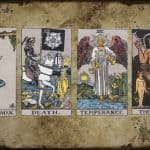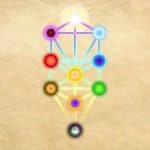
Arthur Edward Waite was more than just a poet or historian—he was a seeker. His life moved between the boundaries of the visible and the hidden, the intellectual and the mystical. Known for his work with the Hermetic Order of the Golden Dawn and later the Fellowship of the Rosy Cross, Waite never fit neatly into one category. He explored the depths of esoteric tradition while constantly searching for a spiritual truth that lay beyond ritual and doctrine.
Waite believed in what he called the “Church behind the Church,” an invisible community of souls devoted to divine wisdom. For him, religion was not bound by institutions but by an inner light shared by those who sought direct communion with the divine. This “Holy Assembly,” as he described it, included the living and the departed, united in their longing to reverse humanity’s fall and return to divine union.
At the heart of Waite’s quest was the allure of hidden knowledge—the sense that beneath every sacred text and symbol, a deeper truth waited to be discovered. He spoke of this inner mystery with reverence, convinced that true wisdom required both discipline and grace. For Waite, uncovering the secret within the secret meant transforming ordinary faith into mystical experience, where the boundary between human love and divine light began to fade.
What emerged was not just scholarship, but a deeply personal vision—a search for the sacred in the secret places of the heart.
A Life Between Magic and Mysticism
Arthur Edward Waite’s spiritual path moved through the colorful world of Victorian occultism yet ultimately pointed inward, toward a quieter and more contemplative truth. His early fascination with the Hermetic Order of the Golden Dawn introduced him to ritual magic, alchemy, and symbolism. The Golden Dawn was the leading esoteric society of its time, promising mastery of ancient wisdom through ceremonial practice. Waite, however, soon found that its focus on magic and external rites could not satisfy his deeper hunger for spiritual union.
In search of something purer, he founded his own group—the Fellowship of the Rosy Cross. Here, the emphasis shifted from ritual power to inner transformation. Waite believed that the highest mysteries were not found in magical formulas but in the personal regeneration of the soul. His approach echoed that of his spiritual hero, Louis-Claude de Saint-Martin, the “unknown philosopher,” who had also turned away from the outward theurgy of his teacher, Martinez de Pasqually, to embrace a more inward, Christian mysticism.
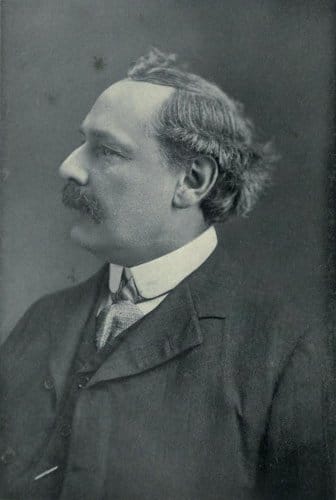
Waite’s faith centered on the existence of a hidden, spiritual fellowship he called “the Church behind the Church.” This was no institution of bricks and altars but a living, unseen communion of souls. Its members—whom he called “men of desire”—were those who sought to reverse the effects of humanity’s fall through an interior journey of purification and love. In his view, this invisible Church united seekers across traditions, forming what he called a “Blessed Company” that worked silently within the world.
For Waite, true initiation did not occur in temples or secret lodges. It took place within the soul itself, through the awakening of divine light. His journey from the Golden Dawn’s outer magic to the Rosy Cross’s inner mysticism marked not a rejection of mystery, but a deeper embrace of it—the transformation of esoteric practice into living spirituality.
Waite the Reluctant Scholar
Arthur Edward Waite was never a scholar in the academic sense, yet his curiosity and dedication turned him into one of the most prolific writers on Western esotericism in the English language. Without formal training or university support, he devoted himself to collecting, translating, and interpreting obscure mystical and magical texts. His shelves filled with volumes on Rosicrucianism, alchemy, Freemasonry, and, most of all, the Kabbalah.
In the late nineteenth and early twentieth centuries, few scholars took such topics seriously. Waite filled that void. His many works—dense, elaborate, and rich with references—became standard sources for English readers curious about hidden wisdom. For decades, his books shaped how the English-speaking world understood the Kabbalah and the occult. In this sense, he laid the groundwork for future studies, even though his methods lacked the precision of modern scholarship.
Yet his learning came with limits. Waite did not read Hebrew or Aramaic, relying entirely on translations, especially Christian Knorr von Rosenroth’s Kabbala Denudata and Jean de Pauly’s French Zohar. These versions, colored by Christian and occult interpretations, led him astray on key points. His style—grand, elusive, and at times frustratingly vague—made his writings difficult to follow. Still, his genuine passion for the spiritual meaning behind the texts gave his work an unusual depth and sincerity.
The great scholar Gershom Scholem, founder of modern Kabbalah studies, offered a fair yet firm judgment. He admired Waite’s diligence and intuition, noting that his efforts revealed how Jewish scholars had long neglected their own mystical tradition. Scholem recognized in Waite a rare sensitivity to the spiritual essence of Kabbalah, even as he lamented his lack of linguistic skill and historical grounding. What impressed him most was Waite’s “unprejudiced and penetrating” grasp of the Kabbalah’s sexual symbolism—an insight that, in Scholem’s view, touched the true heart of its mysticism.
Waite stood between two worlds: not quite a scholar, not merely a mystic. His work bridged academic neglect and spiritual enthusiasm, revealing both the dangers and the promise of intuitive scholarship. Though later generations would correct his errors, they continued to draw inspiration from his desire to uncover the living mystery behind ancient words.
The Allure and Limits of Waite’s Kabbalah
Arthur Edward Waite approached the Kabbalah as both a seeker and a storyteller. He did not know Hebrew or Aramaic, yet that did not stop him from exploring the vast symbolic landscape of Jewish mysticism. Relying on translations rather than original sources, he pieced together a picture of Kabbalah that reflected more of his own spiritual imagination than strict scholarship. His methods frustrated academics, but his passion for discovering spiritual truth made his writings captivating for those drawn to mystery.
Waite believed that within the Kabbalah lay a universal wisdom shared by all sacred traditions. In his eyes, it was not simply a Jewish system but part of an eternal “secret doctrine” linking alchemy, Christian mysticism, and divine revelation. This approach blurred boundaries between history and faith, fact and interpretation. Critics pointed out that his lack of linguistic skill and his dependence on flawed translations—especially Jean de Pauly’s romanticized version of the Zohar—led him into serious errors. Yet Waite’s intuition often guided him toward genuine insights about the inner meaning of the texts.
One of those insights was his recognition of what he called “the mystery of sex” as central to Kabbalistic thought. While others ignored or moralized this theme, Waite sensed that sexual symbolism in the Zohar pointed to a divine reality—the sacred union between masculine and feminine aspects of creation. To him, this was not about physical passion but about the reunion of divided principles, a mystical marriage that mirrored the restoration of humanity’s lost harmony with God. Even Gershom Scholem, the most rigorous Kabbalah scholar of the century, acknowledged that Waite’s intuition here was remarkably accurate.
Waite’s interpretation turned the Kabbalah into a bridge between Christian theosophy and Jewish mysticism. He saw parallels between the Kabbalistic Shekhinah—the feminine presence of God—and the Christian understanding of divine love and grace. This synthesis reflected his lifelong pursuit of union with the divine through inward transformation. Though his scholarship fell short of academic rigor, his spiritual reading of the Kabbalah captured something timeless: the human yearning to reunite with the sacred source of life.
Waite’s Kabbalah, then, was less about history than about the heart—a map of mystical desire drawn from the symbols of another tradition, reimagined through the lens of Christian mysticism and personal longing.

The House of the Hidden Light: Love, Loss, and Illumination
Among Arthur Edward Waite’s many writings, The House of the Hidden Light stands apart as his most intimate and enigmatic work. Co-written with his close friend, the writer Arthur Machen, it was printed privately in 1904 with only three copies ever made. On the surface, it appears to be a series of mystical letters between two initiates—Frater Elias Artista (Waite) and Frater Filius Aquarum (Machen). Beneath that poetic language, however, lies a story of grief, longing, and spiritual rebirth.
The letters trace what the two men described as an annus mirabilis, a “wonderful year” marked by nights of intense companionship, alcohol-fueled conversation, and the presence of two women who deeply influenced them. For Machen, it followed the death of his beloved wife, Amy, whose passing had plunged him into despair. For Waite, it was a time of secret emotional turmoil centered around Dora Lakeman, the woman he loved but could never marry. Their meetings, charged with emotion and unfulfilled desire, became the raw material for an initiatory drama written in the language of mysticism.
In the symbolic world of the book, these personal experiences are transformed into sacred mysteries. The women become Soror Ignis Ardens (Sister of the Ardent Fire) and Soror Benedicta in Aqua (Sister Blessed in the Water)—living symbols of spiritual passion and purity. Together, the four friends play out an inner alchemy of love, loss, and illumination. The emotional intensity of their relationships is expressed as initiation into higher “degrees” of spiritual understanding, each stage reflecting a deeper refinement of desire.
At its core, The House of the Hidden Light is about the “transformation of desire.” Waite and Machen sought to turn earthly passion into divine aspiration, to sublimate longing into light. The letters reveal a painful but profound realization: that human love, when purified by suffering, can become a pathway to the sacred. For Waite, unfulfilled love was not a curse but a spiritual discipline—a fire that burned away illusion and opened the soul to divine union.
Through this strange, symbolic correspondence, heartbreak becomes revelation. What began as grief and forbidden desire ends as mystical insight: the discovery that true love does not die but transforms, becoming part of the “hidden light” that glows behind all things.
Women of Fire and Water: The Elemental Muses
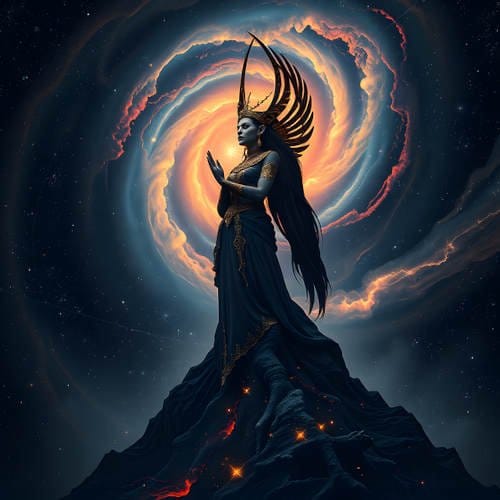
In The House of the Hidden Light, Arthur Edward Waite and Arthur Machen gave mystical form to their most intimate emotions through two striking feminine archetypes—Soror Ignis Ardens and Soror Benedicta in Aqua. These “sisters of the elements,” born from the language of alchemy and Kabbalah, embodied the dual nature of divine femininity: the purifying flame and the cleansing water. They were not merely fictional figures but symbolic reflections of the real women who moved through the authors’ lives—Vivienne Pierpoint and Dora Lakeman.
Soror Ignis Ardens, the “Sister of the Ardent Fire,” represented passion, inspiration, and the raw energy of transformation. Her fiery nature captured the spiritual intensity that both illuminated and consumed. In contrast, Soror Benedicta in Aqua, the “Sister Blessed in the Water,” personified gentleness, grace, and emotional depth. To Waite, she mirrored the soul’s yearning for purification—a reflection of his own deep and impossible love for Dora. Together, these figures formed a perfect balance of opposites, echoing the alchemical marriage of sun and moon, fire and water, spirit and soul.
Through this symbolic interplay, Waite and Machen turned their personal experiences into sacred drama. Each encounter, each loss, became part of a larger spiritual ritual. The lovers’ separation and reunion symbolized not only human longing but the eternal dance of divine forces. Passion was no longer a weakness to be suppressed but a sacred fire that, when purified, revealed the presence of God.
In this esoteric vision, love itself became initiation. The emotional trials of earthly affection were recast as necessary stages in the soul’s ascent. Every joy and heartbreak carried hidden meaning—an alchemical process through which desire was refined into illumination. The women of fire and water were not simply muses; they were gateways to divine understanding.
Through them, Waite gave voice to a mystical truth he found echoed in the Kabbalah: that the union of opposites—masculine and feminine, spirit and matter—is the key to restoring harmony in both the cosmos and the heart.
Related reading: The Curious Life of Montague Summers: Witch Hunter, Scholar, and Occult Enigma – Opens in new tab
The Hidden Marriage: When Body and Soul Converge
At the heart of Arthur Edward Waite’s mysticism lay a vision of sacred union he called the “Hermetic Marriage.” This was no ordinary marriage, nor merely an esoteric metaphor—it was the ultimate reconciliation of opposites, where spirit and matter, male and female, body and soul came together as one. Waite believed that this hidden marriage was the key to spiritual transformation, a reflection of the divine harmony that once existed before humanity’s fall from grace.
For Waite, the Hermetic Marriage drew deeply from alchemical symbolism. Just as the alchemist sought to unite sun and moon, king and queen, sulphur and mercury, the mystic sought to merge the active and receptive principles of creation within the soul. This was not about abandoning the physical world but sanctifying it—turning human love into a mirror of divine creation. Love, in this sense, was the most potent alchemy of all. It refined desire into spirit, transmuting passion into light.
In The House of the Hidden Light, this sacred idea unfolded through Waite’s imagined relationship with Soror Benedicta in Aqua. Though their love could never be fulfilled in life, he saw their connection as an expression of the Hermetic Marriage—a union that transcended the physical and continued on a higher plane. Through her, Waite envisioned the eternal feminine as both muse and mediator, the earthly reflection of the Shekhinah, the divine bride of the Kabbalah.
The concept bridged traditions—alchemy, Christian mysticism, and Jewish symbolism—all converging in a single truth: the sacred mystery of love as the creative pulse of the universe. In this mystical framework, sexual union, when purified of selfish desire, became a holy act. It mirrored the cosmic joining of God and creation, restoring balance between the seen and unseen.
Waite’s dream of the Hermetic Marriage was, in the end, both deeply personal and profoundly spiritual. It was his way of expressing a timeless longing—to make the human experience of love a living symbol of divine unity. Through this hidden marriage, he sought to reveal that every true union, whether of hearts or souls, whispers of the eternal harmony that underlies all being.
Related reading: The Fascinating Connection Between Modern Magic and Psychology – Opens in new tab
Between the Zohar and the Heart
Arthur Edward Waite’s understanding of the Kabbalah reached its most intimate depth through his encounter with Jean de Pauly’s French translation of the Zohar. Though modern scholars later dismissed De Pauly’s version as inaccurate and overly Christianized, it profoundly influenced Waite. The translation’s vivid language and mystical imagery spoke to his imagination, presenting a vision of the divine steeped in love, union, and hidden light. To Waite, the Zohar was not simply a Jewish mystical text—it was a revelation of the same eternal truth he sought in Christian mysticism: that the divine expresses itself through relationship, through the joining of opposites.
De Pauly’s rendering of the Zohar emphasized the sacred union between the masculine and feminine aspects of God, known as the Holy One and the Shekhinah. This symbolism captured Waite’s heart. The Shekhinah—the indwelling presence of God, often described as the divine bride—embodied for him the eternal feminine principle. She was the soul of creation, yearning to reunite with her heavenly counterpart. Waite saw in her a reflection of his own spiritual longing and of his love for Dora, his Soror Benedicta in Aqua.
For Waite, the Zohar’s erotic mysticism was not about physical desire but about the spiritual power of union. He believed that the human act of love, when sanctified by devotion, mirrored the cosmic marriage between the divine and the world. The joining of man and woman became a sacrament of creation—a moment when the hidden light of God shone through the veil of matter. In this way, the Zohar’s mystical language of love and union gave theological form to Waite’s most personal emotions.
His theology, then, was not born in the study alone but in the heart. The boundaries between scholarship and experience dissolved as Waite read his own story into the sacred texts. Through the lens of personal longing, he found in the Kabbalah a confirmation of what he already felt to be true: that love, in its highest form, is both human and divine. The Shekhinah was not only the unseen bride of God—she was also the unseen beloved of his soul.
In merging the Zohar’s symbols with his inner life, Waite created a bridge between mysticism and emotion, text and experience. His reading may not have met the standards of modern scholarship, but it revealed something more enduring—a belief that the mysteries of heaven are written not only in sacred books, but also in the language of the heart.
The Light Beyond Desire
Arthur Edward Waite’s life and writings show how heartbreak can become a sacred teacher. His unfulfilled love for Dora Lakeman—his Soror Benedicta in Aqua—was not buried in sorrow but transfigured into a spiritual revelation. Rather than viewing desire as a weakness, Waite turned it into a path toward divine understanding. Love, in his eyes, was the purest mirror of the soul’s longing for God.
In The House of the Hidden Light, Waite’s alter ego, Elias Artista, speaks of a love that surpasses earthly boundaries. Though separated in life, Elias and Benedicta remain united in spirit, awaiting reunion beyond the physical world. Their bond reflects the mystical union between the human and the divine—the soul’s journey to rejoin its eternal source. For Waite, their story did not end in loss but in transformation. Through love’s pain, he glimpsed the eternal joy that lies beyond desire, the radiant “hidden light” that illuminates both heaven and the human heart.
This mystical love story reveals a universal truth about the human search for transcendence. Every longing, every ache of separation, becomes a spark pointing toward something greater. Waite’s vision teaches that love’s deepest purpose is not possession, but awakening. When refined through devotion, even the most personal emotions become acts of worship. The beloved, whether human or divine, becomes the vessel through which the infinite is revealed.
For Waite, to love was to participate in creation itself—to taste, if only for a moment, the harmony that binds all things. His journey from desire to illumination reminds us that spiritual transformation often begins not in temples or texts, but in the fragile chambers of the heart. Through the mystery of love, he found the light that never fades—the hidden radiance that turns human longing into divine communion.
Related reading: The Enchantment That Never Died: How Magic Adapted to a Rational World – Opens in new tab
End Words: The Secret Fire Still Burns
Arthur Edward Waite’s lifelong search led him to a profound realization—that the mystery of sex was never simply about the body, but about the soul. Behind the language of alchemy, Kabbalah, and mysticism, he found a single truth: love is the sacred force that reconnects what has been divided. For him, the union of male and female symbolized far more than physical desire. It was the living image of divine creation, the eternal dance between spirit and matter, heaven and earth.
Through his studies and experiences, Waite turned longing into revelation. His fascination with the Zohar’s erotic symbolism, his secret correspondence in The House of the Hidden Light, and his dream of the “Hermetic Marriage” all pointed to one luminous idea—that human love is a reflection of divine unity. The heart’s ache for connection mirrors the soul’s yearning for its source.
This vision of hidden light remains timeless. It reminds us that the sacred is not distant but intertwined with the passions and tenderness of human life. The same fire that burns in love’s desire also glows in the spirit’s quest for truth. For Waite, to follow that fire was to move closer to God, to uncover the beauty that hides behind every form, every feeling, every fleeting moment of intimacy.
Even now, the secret fire still burns—in every soul that seeks wholeness, in every heart that dares to love deeply enough to glimpse the divine within it.
Source: Hanegraaff, Wouter J. Mysteries of Sex in the House of the Hidden Light: Arthur Edward Waite and the Kabbalah (2018).
Check out our recommendations at “Occult Bookshelf” and many free resources at our “Free Library“
Stay in Touch
 Join our newsletter by using the forms on this website or click here!
- Follow us on Google News
- Follow us on Facebook


Featured image by Daniel R from Pixabay