Long before she was reclaimed as a modern icon of independence, Lilith was a name whispered with dread in the libraries and theaters of Early Modern England. Emerging from the shadows of ancient Mesopotamian lore and the mystical fringes of the Hebraic Cabala, she represented more than just a myth; she was the ultimate embodiment of the “feminine demonic.” In a world where the lines between science, religion, and magic were blurrier than we often imagine, the figure of the night-witch became a vital tool for poets and philosophers trying to map the boundaries of human nature and political power.
This was an era of profound intellectual transformation. As Renaissance humanists unearthed “lost” Egyptian and Greek texts, they inadvertently invited a host of ancient demons into the heart of Christian Europe. From the scholarly courts of Elizabeth I to the dark, prophetic stages of Jacobean London, the evolution of Lilith reveals a society deeply preoccupied with the perceived threat of feminine autonomy. Whether she appeared as a predatory serpent, a grieving child-murderer, or a defiant “pre-Eve” consort, her presence served as a mirror for the cultural anxieties of the time.
By exploring the works of giants like Christopher Marlowe, William Shakespeare, and John Milton, we can see how the “feminine demonic” was meticulously constructed. These writers didn’t just tell stories of monsters; they used occult philosophy to explore the very real tensions of gender, sexuality, and divine right. This article dives into the “re-occulted” world of the sixteenth and seventeenth centuries to uncover how an ancient goddess was transformed into the most enduring “night-hag” of English literature.
Beneath the Wings of the Night Queen: The Archetype of Lilith
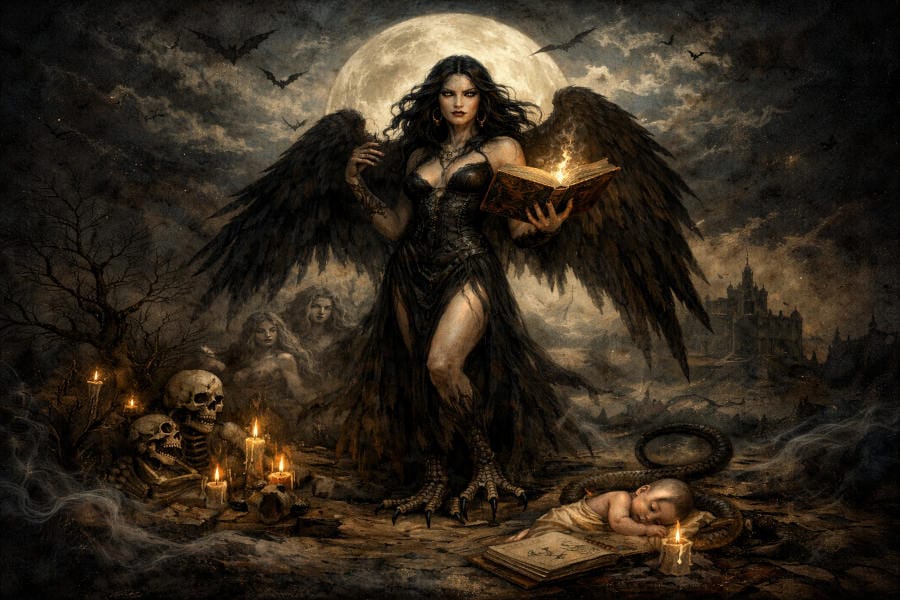
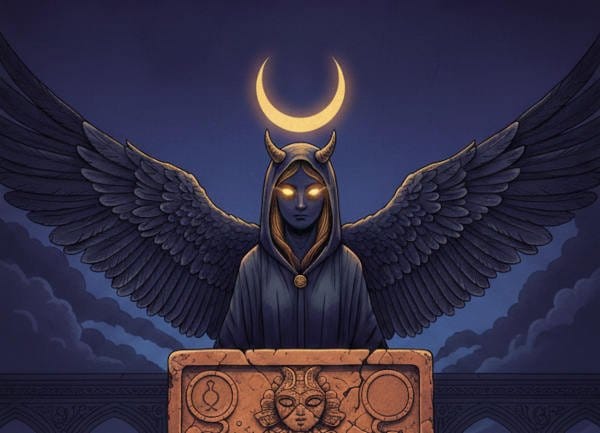
The legend of the feminine demonic in Early Modern England often begins with a single, striking image. In 2003, the British Museum acquired a terracotta relief from Mesopotamia, famously known as the “Queen of the Night” or the Burney Relief. This ancient artifact depicts a winged, bird-footed goddess often identified as Lilith, Astarte, or Ishtar. It serves as a visual anchor for the “Queen of the Underworld,” a figure that has haunted the human imagination for millennia.
While the relief itself is an ancient relic, the ideas it represents—gendered evil and the threat of the feminine—underwent a significant evolution during the sixteenth and seventeenth centuries. Lilith became a focal point for philosophers and poets alike. They sought to understand the intersection of sexual power and political order through her terrifying image.
The Intersection of Gender, Sexuality, and Political Power
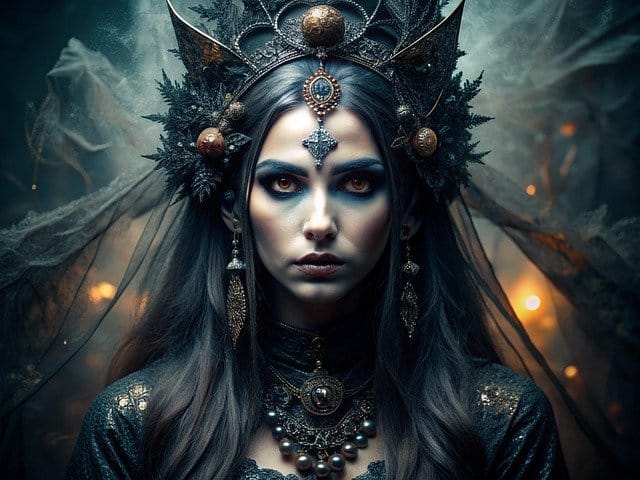
In Early Modern England, the study of demonology was never just about the supernatural. It was a mirror held up to the socio-political climate of the time. When non-Christian sources like the Hebraic Cabala and pre-Christian philosophies were integrated into the Christian worldview, they brought Lilith with them. She emerged not just as a demon, but as a symbol of “demonic, political inversion”.
Lilith represents a specific kind of anxiety regarding feminine autonomy and sexuality. Philosophers used her to explore the link between gender and evil, often viewing the feminine as more susceptible to demonic influence. This gendering of the demonic had profound implications for how power was understood. It suggested that feminine power was inherently illicit and a threat to the established “divine right” of the state.
Shifting Rhetoric and the Gendering of the Demonic
The introduction of feminist theory into the study of the occult has revealed how the “neutral” becomes “sexualized” when the feminine is involved. In the literature of this period, the difference between a non-gendered spirit and a feminine demon marks a critical shift in rhetoric. This is not merely about the history of witchcraft; it is about how the gendering of demons affected their roles in rituals and cultural narratives.
Scholars use “Hermetic drift” to explain how symbols like the moon evolved into poetic signifiers for the feminine demonic. The moon was no longer just a celestial body. Instead, it became a part of a “constellation” of meanings that included Lilith, Hecate, and the Lamia. By understanding these occulted readings, we can see how Early Modern writers used these figures to voice anxieties about power and social order.
Related reading: Magic in the Age of Enlightenment: How the Seventeenth Century Redefined Magic – Opens in new tab
The Renaissance Revival: Bringing the Occult into the Light
The European Renaissance was defined by a profound intellectual curiosity that looked backward to antiquity to move forward. Central to this movement was a “Cabalistic revolution” that saw non-Christian sources, including pre-Christian philosophy and Hebraic Cabala, integrated into the Christian worldview. This era revitalized interest in Neoplatonism, Hermeticism, and Cabalism, three traditions that shared similar cosmologies centered on spiritual ascension and elemental sympathies. As these ideas converged, they reshaped the understanding of man’s place within the angelic hierarchy.
The mythic origins and cosmology of Hermeticism, in particular, provided a framework for the theory of correspondences. This principle suggested that every element of the sublunar world was linked to the superior world through similitudes and universal analogy. Such connections allowed scholars to interpret the natural world as a “signature” of divine parenthood.
Italian Humanism: Reconciling Magic with Christianity
The deliberate combination of these ancient systems was pioneered by Italian Humanist scholars, most notably Marsilio Ficino and Giovanni Pico della Mirandola. Working within the Platonic Academy, they sought to revive Hermetic and Neoplatonic interests specifically within a Christian context. Their goal was to harmonize these “pagan” insights with the Holy Scriptures, viewing them as ancient precursors to Christian truth.
Ficino’s influential work, Three Books on Life (Aff.link), became a cornerstone of this movement, bringing occultism more fully into the cultural and literary criticism of the time. Pico della Mirandola further expanded these boundaries by incorporating the Hebraic Cabala, arguing that it offered a deeper understanding of the Christian faith. This period represented the “magical Renaissance,” where the dark offspring of humanism were brought into the light of academic study.
Defining the Boundaries: Natural Magic versus the Profane Demonic
As occult theories gained traction, they inevitably sparked contemporary anxieties regarding their darker, more “demonological” aspects. To navigate this, Humanist scholars worked tirelessly to separate “natural magic” from the “profane” or demonic. They argued that their practices—such as the use of talismans and hymns—were not addressed to satanic forces. Instead, they claimed these were appeals to the natural world, which, as a creation of God, was worthy of praise and investigation.
Despite these efforts, the distinction remained a point of intense struggle. While scholars pursued “permissible magic” through text and literacy, the public often reacted with fear and censorship. This tension led to a rise in necromancy handbooks that muddled Hebrew and openly called for demonic invocation, further complicating the boundaries between science and sorcery. The struggle to define these limits eventually migrated to England, where it would influence the works of writers like Marlowe and Shakespeare.
Magic Crosses the Channel: The Occult in Elizabethan England
The intellectual landscape of Elizabethan England was profoundly shaped by the migration of continental philosophy. As English Protestant Humanism emphasized a return to original religious sources, scholars were drawn toward Hebrew studies and rabbinical commentaries on the Torah. This academic curiosity naturally extended into the realm of the Cabalistic and Hermetic traditions that had already taken root in Europe. By the first half of the sixteenth century, London printers began producing English translations of influential continental works.
Among these, the writings of the German occultist Heinrich Cornelius Agrippa were particularly significant, especially following his personal visit to London in 1510. These texts provided a theoretical framework for “permissible magic,” which relied on literacy and elite scholarship rather than the crude sorcery associated with the illiterate.
From Agrippa to John Dee: Occult Philosophy at the Court
The interest in occultism was not merely academic; it reached the highest levels of political power. Rulers across Europe sought the specialized skills of occultists to navigate the uncertainties of their reigns. In England, both Mary Tudor and Elizabeth I solicited the services of John Dee, who served as a court astrologer and philosopher.
Dee, along with practitioners like Edward Kelley and Simon Forman, navigated a dangerous path between royal favor and public hostility. They often tried to cloak their practices in Christian theology to protect themselves from allegations of black magic, which was frequently linked to treason and political disorder. Their work engaged deeply with the “feminine demonic,” exploring the appropriateness of feminine elements within magical hierarchies and the anxieties sparked by the intrusion of sexuality into their rituals.
Staging the Demonic: Elite Magicians and the Feminine Threat
The tension between scholarly magic and demonic threat found a vibrant home on the Elizabethan stage. Dramatists like Robert Greene and Christopher Marlowe used the figure of the elite magician to explore contemporary fears. In Greene’s Friar Bacon and Friar Bungay and Marlowe’s Doctor Faustus (Aff.links), the use of continental occult ideas provided a backdrop for examining the limits of human knowledge and the dangers of illicit power.
These works often contrasted the “learned” magician with the “feminine demonic,” portraying the latter as a source of potential subversion. In plays such as Marlowe’s Faustus and Greene’s Alphonsus, the staging of magic allowed audiences to witness the internal struggle of the practitioner while highlighting the perceived risks of feminine influence.
Shakespeare’s Shadows: The Moon and the Witch as Cultural Anxiety
William Shakespeare further explored these themes through recurring motifs that signaled a deep-seated cultural anxiety. In works like Henry VI, Part 2 and Henry IV, Part 1, motifs of the moon and the witch served as poetic signifiers for the feminine demonic. These symbols were not merely atmospheric; they functioned as a “constellation” of meanings that connected femininity to witchcraft and illicit power.
By using these motifs, Shakespeare tapped into the contemporary belief that feminine power was often an inversion of the natural and political order. The presence of the witch on stage provided a visual and narrative shorthand for the threats posed by those who operated outside the sanctioned boundaries of elite, “literate” magic.
A King’s Crusade: Demonology under James VI and I
When James VI of Scotland ascended to the English throne as James I, he brought with him a specialized and intense focus on the supernatural. Unlike many of his predecessors, James was a published demonologist. His 1597 treatise, Daemonologie (Aff.link), serves as a crucial window into the royal perspective on witchcraft. James framed the hunt for witches not merely as a religious duty, but as a necessary defense of the state. He argued that the devil’s agents were real, physical threats to the crown, and he specifically linked the susceptibility to demonic influence to the “frailty” of the feminine gender.
Divine Right vs. Demonic Inversion
The King’s obsession with witchcraft was deeply tied to his belief in the Divine Right of Kings. In this worldview, the monarch acted as God’s deputy on earth; therefore, any act of witchcraft was seen as a direct act of treason against the divine order. James viewed the witch as a “demonic inversion” of the loyal subject.
Because women were perceived as morally and physically weaker, they were identified as the primary vessels for this subversion. This gendering of evil meant that feminine autonomy wasn’t just a social concern—it was a political emergency. The “feminine demonic” became a symbol of everything that could overturn the stability of the kingdom, leading to a legal and cultural climate where gender and heresy were inextricably linked.
Related reading: The Evolution of Modern Western Magic: From Ancient Mysticism to Today’s Spiritual Path – Opens in new tab
The Linguistic Web: John Selden’s De Dis Syris
As the seventeenth century progressed, the study of the demonic moved from the royal court to the libraries of elite scholars. One of the most significant figures in this transition was John Selden. His seminal work, De Dis Syris (On the Syrian Gods), shifted the focus from folklore to linguistics and ancient history. Selden treated demonic figures not just as theological entities, but as historical “idols” that could be traced through language.
Selden’s scholarship created a “linguistic web” that connected various ancient goddesses. He identified a “constellation” of meanings surrounding the figure of Astarte, linking her to the moon, Venus, and eventually the Hebrew Lilith. By tracing these etymological roots, Selden provided a scholarly foundation for the “night-witch” archetype. This academic approach allowed later poets and writers to reference Lilith not just as a monster, but as a complex historical and mythological figure woven into the very fabric of ancient civilization.
The Theater of Dissent: Witches and Masques in Jacobean Drama
In the Jacobean era, the royal court became a stage where the complexities of the feminine demonic were performed through the “masque.” Ben Jonson, a master of this form, used alchemical and occult imagery to construct courtly visions of order and chaos. In his Masque of Queens (Aff.link), Jonson introduced the “antimasque,” a chaotic prelude featuring hags and witches who represented the “feminine demonic” in its most disorderly form. These figures were not just theatrical villains; they were symbols of the vices that the King’s “divine” presence was meant to banish. By framing the demonic through an alchemical lens, Jonson suggested that the monarch acted as a purifying force against the base, volatile elements of feminine rebellion.
Reimagining Sycorax and Hecate: Illicit Power in Shakespeare
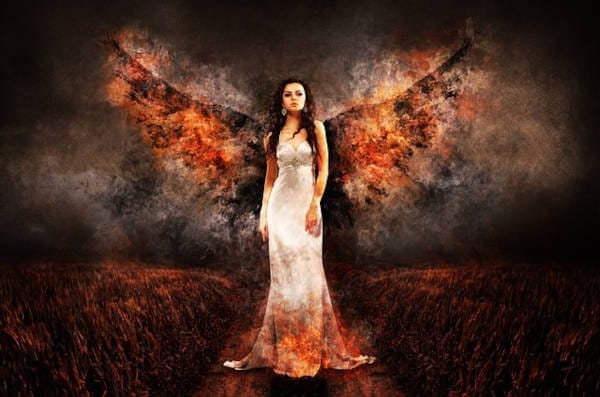
William Shakespeare’s late plays offer a more nuanced exploration of illicit power and maternal legacy. In The Tempest (Aff.link), the figure of Sycorax—though never appearing on stage—looms large as the ultimate “night-witch.” She represents a “bad” magic that is explicitly linked to her feminine fertility and her origins in “Argier.” This stands in sharp contrast to Prospero’s “white” or literate magic.
Similarly, in Macbeth, the presence of Hecate and the “weird sisters” taps into the Jacobean anxiety surrounding the “constellation” of the lunar goddess. These figures represent a power that operates outside the patriarchal state, using prophecy and manipulation to subvert the political order. Shakespeare uses these feminine archetypes to show that the demonic is often a manifestation of the “unspoken” fears regarding female autonomy and the disruption of lineage.
Staging Rebellion: Thomas Dekker and Political Dissent
While some playwrights used the witch to reinforce royal authority, Thomas Dekker used the figure to voice social and political dissent. In The Witch of Edmonton (Aff.link), written with collaborators, Dekker presents a more sympathetic and localized view of the witch. Mother Sawyer is not a cosmic demon but a marginalized woman driven to the demonic by the cruelty and “contagion” of her community.
This portrayal turned the “feminine demonic” into a critique of social injustice. By showing how a woman is forced into the role of a witch by a patriarchal society, Dekker used the theater as a space for rebellion. His work suggests that the true “evil” might not reside in the supernatural, but in the political and social structures that demonize the vulnerable to maintain power.
The Proliferation of the Night Witch: Post-Selden Demonology
Following the scholarly groundwork laid by John Selden, the figure of Lilith transitioned from obscure rabbinical texts into the mainstream of English poetic imagination. No longer confined to the dusty pages of Latin treatises, she began to emerge as a recurring monster in mid-seventeenth-century literature. This “proliferation” was fueled by a growing fascination with the “night-witch” archetype—a figure that combined ancient mythology with contemporary fears of the supernatural. As poets sought to explore the darker corners of the human psyche, Lilith provided a perfect vessel for themes of exile, predatory beauty, and feminine rebellion.
The Many Faces of the Demon: Consort, Murderer, and Serpent
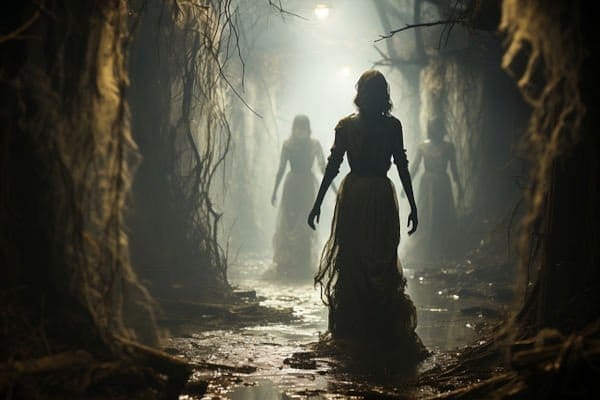
In the literature of this period, Lilith is rarely a one-dimensional villain. Instead, she wears many faces, each representing a different facet of the feminine demonic. She is often depicted as the “pre-Eve” consort—Adam’s first wife who refused to be subservient and was subsequently cast out of Eden. This version of the myth highlights her as a symbol of domestic and cosmic defiance.
Beyond the rebellious wife, Lilith also took on the terrifying roles of the child-murderer and the serpent. These variations drew heavily from the Alphabet of Ben Sira and other Cabalistic sources, which described her as a nocturnal predator who threatened infants and seduced men in their sleep. By blending her identity with the serpent in the garden, writers created a “constellation” of evil that linked the fall of man directly to a primordial, feminine threat.
Lamia and the Moon: Poetic Renditions by Herrick and Heywood
The transformation of Lilith was further enriched by her association with other classical monsters, specifically the Lamia and the Empusa. Poets like Robert Herrick and Thomas Heywood utilized these connections to craft evocative, atmospheric verses. In their works, the “night-witch” is often inextricably linked to the moon, moving through the shadows as a lunar deity or a wandering spirit.
Thomas Heywood, in his extensive writings on the hierarchy of angels and demons, categorized these figures within a structured “theology of the dark.” Meanwhile, Herrick’s poetry often focused on the “charms” and “incantations” associated with such nocturnal beings, using them to explore the boundaries between folk belief and high art. These poetic renditions solidified the idea of the feminine demonic as something both beautiful and deadly, a “hollow” beauty that masked a predatory nature.
Related reading: Beyond the Shadows: How Occultism Shaped Politics, Science, and Social Change – Opens in new tab
Milton’s “Re-Occulted” World: Lilith in Paradise Lost
John Milton’s engagement with the occult was not a matter of mere superstition, but a deep dive into the intellectual currents of his time. To understand Lilith’s presence in Paradise Lost, we must trace the Cabalistic influences and Hebrew scholarship that permeated Milton’s library.
Scholars have long debated Milton’s access to the Zohar and other mystical texts. By examining his use of the “Hollow” beauty and the serpent’s transformation, we see a writer testing the boundaries of orthodox theology with ancient, esoteric ideas. Lilith exists in the poem not always by name, but through the “night-hag” imagery and the specific characterization of Sin as a creature of dual nature—beautiful above and monstrous below.
The “Horned Moon” and Hecate: Subtle Signifiers of Evil
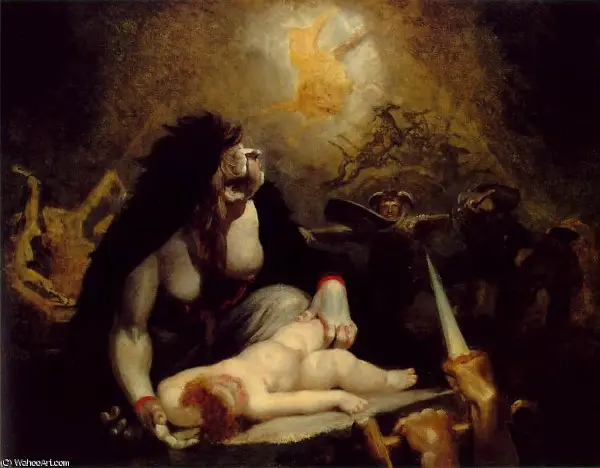
Before the grand scope of his epics, Milton’s early Latin poetry served as a laboratory for his exploration of the feminine demonic. In these works, he frequently utilized the “Horned Moon” as a cryptic reference to Hecate and the lunar mysteries. These are not just atmospheric descriptions; they are precise signifiers of a “constellation” of demonic meanings.
By invoking the moon in connection with darkness and secrecy, Milton tapped into the long-standing association between the lunar cycle and the wandering “night-witch.” This early experimentation laid the groundwork for his later depictions of the supernatural, where the feminine is often linked to the “unseen” and the “sublunar” forces that challenge divine light.
Hermeticism Hidden in Plain Sight
The legacy of occult philosophy remained a constant, though often hidden, force in Milton’s poetic development. Even as he moved toward a more austere Protestantism, the Hermetic and Neoplatonic ideas of his youth continued to influence his cosmology. Milton’s universe is one of “vitalist” matter, where the boundaries between the physical and the spiritual are porous.
This “re-occulted” world view allowed him to portray the demonic not as a distant fairy tale, but as a tangible reality rooted in ancient philosophy. The enduring influence of Hermeticism is visible in his descriptions of angelic substance and the “signatures” of divine power found throughout the natural world. Ultimately, Milton did not discard the occult; he refined it into a sophisticated literary tool to explore the origins of evil and the complexities of the human soul.
End Words
Tracing the figure of Lilith through the Early Modern period reveals that she was far more than a simple campfire ghost story or a piece of forgotten folklore. She was a sophisticated intellectual construct that allowed writers to explore the most pressing anxieties of their day, from the dangers of illicit knowledge to the perceived threat of a woman who refuses to be governed. By weaving together ancient Hebrew traditions, classical mythology, and the emerging science of demonology, the thinkers of this era created a lasting archetype of feminine rebellion that still resonates in our culture today.
Understanding this “feminine demonic” gives us a clearer window into the history of gender and power. It shows how the scholarly pursuit of magic and the political pursuit of order were often two sides of the same coin, both using the image of the “night-witch” to define what was considered natural and what was deemed dangerous. As we look back at the works of Jonson, Shakespeare, and Milton, we see that the shadow of Lilith is not just a relic of the past, but a testament to the enduring power of myth to shape our social and political reality.
Source: Spoto, Stephanie. “The Figure of Lilith and the Feminine Demonic in Early Modern Literature”. PhD Diss. University of Edinburgh, 2012. 2012.
Check out our recommendations at “Occult Bookshelf” and many free resources at our “Free Library“