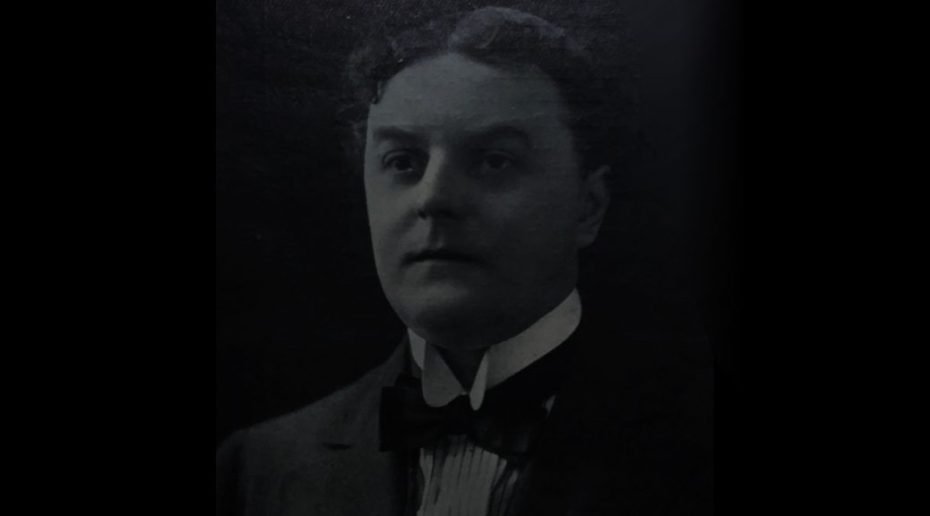
Montague Summers was once a familiar name in literary and occult circles, yet today he is nearly forgotten. During his lifetime, he enjoyed genuine prominence, publishing widely, moving among influential writers, and cultivating a reputation as a scholar who insisted that witches, demons, and vampires were not merely legends but literal forces in history.
Although his name has faded, his influence has not. His books remain in print around the world, quietly shaping how readers imagine the darker corners of the supernatural. Many people encounter his work indirectly through modern discussions of witchcraft and vampirism without realizing how much of that imagery traces back to his writings.
His studies continue to matter because he treated occult subjects with a seriousness that set him apart. Summers wrote with dramatic intensity, weaving extensive research together with unwavering conviction. Instead of dismissing witchcraft as folklore or superstition, he portrayed it as a dangerous and organized threat.
This unusual stance gives his work an atmosphere few modern authors can replicate. His books on vampires, especially, have left a lasting mark. They helped reintroduce forgotten vampire lore to modern audiences long before the genre exploded in popularity, influencing everything from academic treatments to pop-culture interpretations.
Despite sharing many interests with Aleister Crowley, Summers’ reputation took a completely different direction. The two men traveled in similar circles and spoke the same literary language of magic and mystery, yet their legacies could not be more different.
Crowley built a new religious movement, leaving behind a community that continues to publicize his work. Summers never attempted anything similar. He rejected magical practice, embraced an austere form of Catholicism, and fashioned himself as a modern witch-hunter.
As a result, Crowley became a countercultural icon, while Summers drifted into obscurity. The contrast between the notorious occultist and the self-styled defender against the occult remains one of the most intriguing aspects of Summers’ story.
Inside the Making of an Eccentric Mind
Montague Summers grew up in a comfortable and cultured household, surrounded by books and supported by a family that valued education. His father was a successful banker, and the family’s private library offered him access to literature far beyond what most children of his age could explore. Travel added even more depth to his early experiences.
The family spent time on the European continent, exposing Summers to art, architecture, and history at an impressionable age. These early privileges planted the seeds of his later intellectual passions and encouraged a curiosity that never faded.
His early schooling continued to shape him in important ways. After years with private tutors, he attended Misses Lucas’ school, where his teachers quickly recognized his intelligence. One of the most influential figures in his early education was W.W. Asquith, the older brother of a future prime minister and an accomplished Classicist.

Asquith’s guidance strengthened Summers’ love for classical literature and sharpened his developing analytical abilities. Even as a young teenager, Summers’ wit and knowledge impressed the adults around him, while his peers sometimes found him aloof or unusual.
This period also revealed his growing flair for dramatic expression. Long before he edited Restoration plays or founded a theatrical society, Summers was already leaning toward the theatrical in personality and interests. He began reading widely in Renaissance literature and cultivated a fascination with language, style, and performance.
These early tendencies helped form the eccentric persona he later became known for. His emerging identity blended scholarship with showmanship, setting the stage for the unique and somewhat mysterious figure he would become.
Oxford Days: When the Persona Took Shape
When Montague Summers arrived at Oxford in 1899, his personality began to take its unmistakable shape. His natural intelligence flourished in an environment that rewarded erudition, and he quickly became known for his command of languages and his impressive grasp of literary history.
Yet it wasn’t just his academic strengths that drew attention. Summers began dressing flamboyantly, burning incense in his room, and adopting behaviors that were unusual even by Oxford’s bohemian standards. These eccentricities sparked rumors and curiosity, but they also revealed a young man confidently constructing a persona he would maintain for the rest of his life.
Oxford also introduced Summers to a vibrant network of writers, scholars, and aesthetes who deeply influenced his identity. He befriended influential figures such as Hartwell de la Garde Grissell, a former Papal Chamberlain and founder of the Newman Society, as well as poets and critics like Arthur Symons and Baron Jacques d’Adelswärd Fersen.
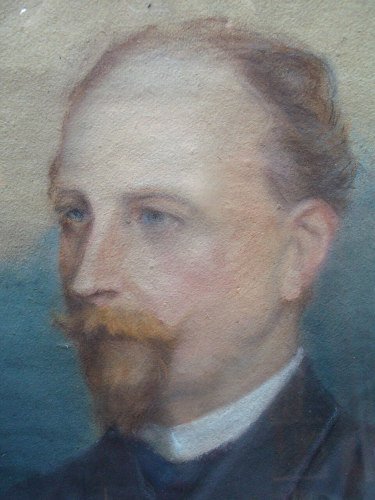
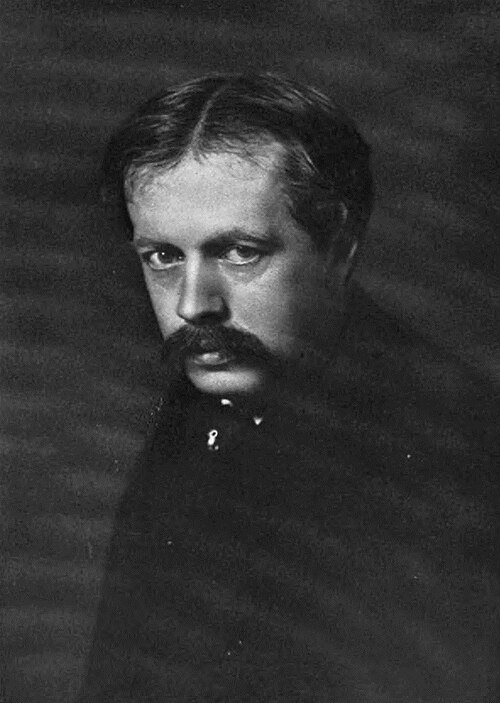
Through these connections, Summers became immersed in the rich currents of late Victorian and early modern literary culture, absorbing ideas about ritual, symbolism, decadence, and artistic expression. These relationships helped him refine his tastes and solidify his fascination with the mystical, the dramatic, and the forbidden.
During this time, Summers also experimented with his own creative work. He became deeply enamored with the poetry of Oscar Wilde and Algernon Charles Swinburne, two writers celebrated for their lush language and defiant moral sensibilities.
Inspired by their style and spirit, Summers began composing poems that blended sacred imagery with darker, more provocative themes. This early poetry would eventually appear in his 1907 collection Antinous and Other Poems, a book steeped in decadence and aesthetic rebellion. These creative efforts showcased his willingness to push boundaries and challenge expectations, foreshadowing the bold and unconventional voice he would later bring to his studies of witchcraft, demonology, and the gothic.
Check out our recommendations at “Occult Bookshelf” and many free resources at our “Free Library“
A Priesthood That Wasn’t: Scandal, Conversion, and Mystery
Montague Summers entered the Anglican ministry with sincere enthusiasm, but his time as a young clergyman unraveled almost as soon as it began. After completing his studies at Lichfield Theological College, he was ordained and appointed to the rural parish of Bitton. It was a disastrous match.
Summers’ eccentric personality clashed with the needs of a quiet country parish, and the lack of supervision only intensified his already unusual behavior. Before long, he faced a damaging accusation of pederasty. Although he was legally acquitted, the scandal left his reputation in ruins. Summers fled the parish and effectively closed the door on his Anglican career.
Rather than retreating from religious life, Summers made a dramatic shift toward Roman Catholicism. He entered St. John’s Seminary at Wonersh with the intention of becoming a Catholic priest, and for a time it seemed he was on track to fulfill that ambition. He even received the clerical tonsure in 1910. But just before his ordination, something changed behind the scenes.
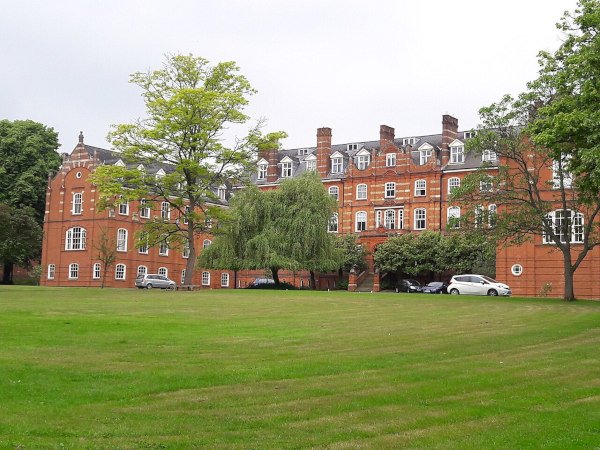
Clergy who later reflected on the episode described an “authoritative tradition” that a senior figure shared troubling information about Summers with the Bishop, leading to his ordination being abruptly canceled. Whether the concern involved his earlier scandal, rumors about his private life, or something else entirely remains unknown. The documentation simply disappeared, leaving his failed ordination shrouded in secrecy.
Despite lacking any official recognition from the Catholic Church, Summers continued to style himself “Reverend” for the rest of his life. He even went so far as to celebrate Mass in public settings, presenting himself confidently as a priest.
For Summers, the title was more than a designation—it was part of his constructed identity. His love of ritual, his theatrical personality, and his desire for spiritual authority all intertwined. The role allowed him to embody the figure he believed himself to be, regardless of institutional approval. It also enhanced the aura of mystery that surrounded him, a quality he seemed to enjoy cultivating. His self-appointed clerical persona became one of the most enduring—and controversial—aspects of his public life.
The Classroom Years: The Teacher Students Never Forgot
Montague Summers spent more than a decade teaching, and his classrooms quickly became known for their lively, unforgettable atmosphere. He brought the spirit of Restoration theater directly into his lessons, turning grammar school instruction into a form of performance.
Students encountered not just Latin and English, but dramatic readings, expressive storytelling, and a teacher who embodied the literature he loved. His command of classical languages impressed nearly everyone who studied with him, and he often boasted—accurately—that he could translate anything into Latin on the spot.
His appearance only added to the spectacle. Summers dressed in a style that seemed transported from the Restoration stage itself. He wore a long frock coat, purple stockings, buckled shoes, and carried a tall mounted cane. His hair was shaved at the sides and grown long in the back, creating the effect of a carefully styled wig.
Students gave him the nickname “Wiggy,” a term that captured both their amusement and their fascination. His striking presence made him impossible to forget and reinforced the sense that they were learning from someone who belonged to another era.
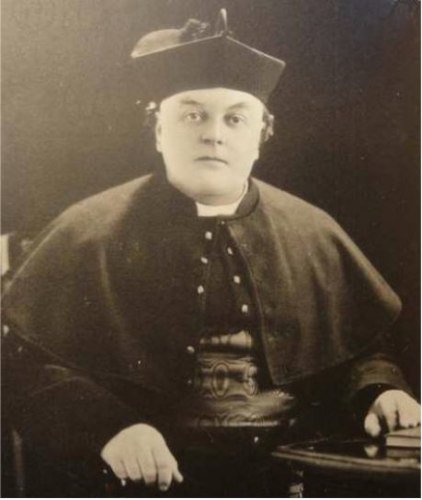
Despite his eccentricities, Summers earned genuine respect and even affection from many of his students. They remembered him as strange, yes, but also brilliant, generous with his knowledge, and endlessly entertaining. Former pupils later described him as one of the most unusual yet compelling teachers ever to join a school staff.
Notably, no rumors of misconduct emerged during these years, and his students’ recollections were overwhelmingly positive. His time in the classroom revealed a different side of Summers—the dedicated instructor whose passion for literature transformed ordinary lessons into memorable experiences.
Building a Literary Empire: Restoration Drama, Gothic Novels, and Beyond
Montague Summers began building his literary career soon after moving to London, and one key encounter shaped everything that followed. Meeting Arthur Henry Bullen, an esteemed scholar and publisher, gave Summers entry into elite literary circles that would have otherwise remained closed to him.
Bullen recognized Summers’ talent and offered him opportunities that quickly elevated his reputation. In 1914, Bullen’s Shakespeare Head Press published Summers’ edited edition of The Rehearsal by George Villiers (Aff.link). It was a sophisticated project for a first major publication, and it marked Summers as a promising scholar with a keen eye for overlooked texts.
From there, Summers positioned himself as a dedicated champion of Restoration drama. He took on the task of editing neglected playwrights, producing new editions filled with extensive introductions and detailed commentary. His scholarship earned admiration from prominent critics of the time, who celebrated the depth of his knowledge and his ability to illuminate forgotten works.
Reviewers noted that his introductions were sometimes more engaging than the plays themselves. Summers approached every project with a meticulousness that set him apart, showcasing his talent for reviving texts that had been long dismissed or ignored.
His passion for Restoration theater extended beyond the printed page. In 1919, Summers founded The Phoenix, a theatrical society devoted to staging Restoration plays with careful attention to historical authenticity. These performances drew significant attention and further solidified his position in London’s cultural scene.
Actors, writers, and social figures admired his dedication, and his dramatic flair became a hallmark of the society’s productions. Summers’ influence in the theater world grew rapidly, helped along by his regular presence in fashionable salons and gatherings.
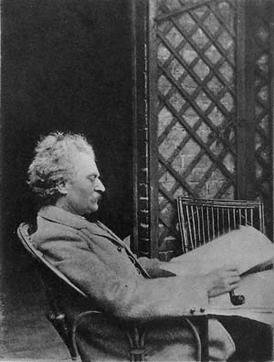
By the mid-1920s, Summers expanded his literary focus to encompass the gothic tradition. He began publishing new editions of early gothic novels and plays, starting with a combined volume of The Castle of Otranto and The Mysterious Mother. His editions brought rare and out-of-print works back to a modern audience, offering scholarly framing that helped readers understand their historical and literary context.
Over the following years, he released carefully edited volumes of lesser-known gothic texts and produced two major studies: The Gothic Quest and A Gothic Bibliography. These contributions were praised for their scope, accuracy, and insight, and they remain important resources for scholars studying early gothic literature. Summers’ work did more than revive forgotten novels—it helped define the academic field itself.
Related reading: Beyond the Shadows: How Occultism Shaped Politics, Science, and Social Change – Opens in new tab
Crafting a Gothic Vision of the Middle Ages
Montague Summers’ fascination with medievalism shaped much of his writing, particularly his work on witchcraft and the gothic. He viewed the Middle Ages not as a distant historical period but as a richly imagined world filled with ritual, symbolism, and supernatural danger.
This perspective reflected his lifelong attraction to dark romanticism—the allure of torchlit chapels, ruined abbeys, and whispered secrets lurking beneath everyday life. Summers approached the medieval world with the eye of both a scholar and a dramatist, blending historical detail with the atmospheric power of legend.
In crafting his vision, Summers created literary spaces dense with mystery and superstition. He wrote about witches, demons, and forbidden rites with an intensity that blurred the boundaries between history and imagination. His descriptions overflowed with sensory detail: abandoned churches haunted by owls, desecrated altars where unholy masses unfolded, and landscapes where evil seemed to breathe.
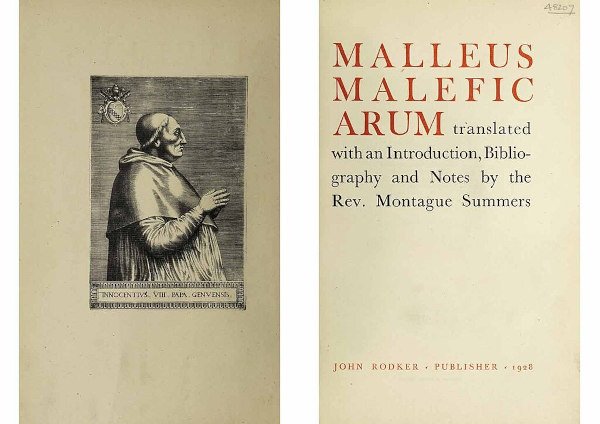
This dramatic style was not merely decorative. It allowed Summers to evoke the emotional landscape of old superstition and fear—an emotional world that many readers found irresistibly compelling. By presenting occult material with solemn reverence, he gave his audiences the unsettling feeling that these horrors might be closer to reality than they expected.
Summers’ contributions to gothic studies soon became foundational for modern scholarship. His work rescued forgotten gothic novels from obscurity, offering detailed introductions and careful annotations that helped scholars and readers navigate the genre’s origins.
The Gothic Quest and A Gothic Bibliography provided researchers with essential tools for understanding the development of gothic literature, long before the field gained widespread academic interest. Even though later scholarship sometimes updated or corrected his interpretations, his efforts laid groundwork that others continued to build upon. Summers’ unique blend of passion, research, and theatrical flair ensured that his vision of the gothic would endure far beyond his lifetime.
The Witch Hunter Persona: Scholarship Meets Credulity
Montague Summers approached witchcraft with a conviction that set him apart from nearly every contemporary scholar. He insisted that witches, demons, and Satanic rites were not symbolic or psychological phenomena but literal realities.
In his view, witches formed an organized, dangerous force acting against Church and State. Summers did not treat witchcraft as folklore or social history. Instead, he portrayed it as a living threat rooted in diabolical intention. This belief shaped the tone and direction of his writings, giving his books an air of urgency and moral certainty rarely found in academic studies of the period.
To support his claims, Summers relied heavily on original sources, especially trial records, eye-witness pamphlets, and the writings of medieval inquisitors. He held these authors in exceptionally high regard, praising their legal training and theological expertise while dismissing modern critics who saw witch hunts as hysteria, superstition, or political manipulation.
Yet his reading of these documents was highly selective. Summers tended to accept confessions at face value, even when they were extracted under duress. He also sidestepped evidence that contradicted his position, presenting the medieval worldview as rational and justified. This approach revealed a clear bias toward the materials that reinforced his belief in the supernatural.
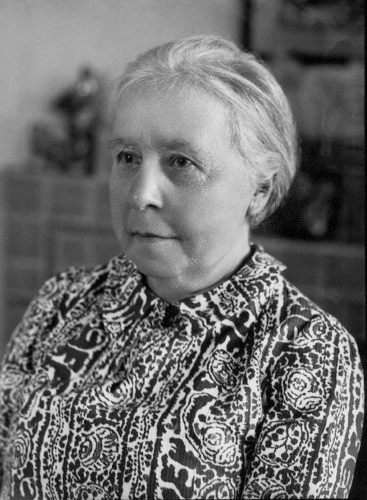
His critique of competing theories was especially sharp when directed at Margaret Murray, whose influential work argued that European witchcraft descended from a surviving pagan religion. Summers readily acknowledged her ingenuity and documentation, yet he condemned her thesis as fundamentally incorrect. He accused Murray of misinterpreting benign folk customs and projecting a fabricated cult structure onto scattered historical evidence.
While he may have been correct in questioning her conclusions, his alternative explanation—that witches truly worshipped Satan and practiced real magic—was even less plausible to modern readers. Nevertheless, his willingness to challenge popular theories demonstrated the confidence with which he approached the subject.
The most striking feature of Summers’ witchcraft books is the tension between his scholarly tone and his sensational beliefs. He wrote with the precision of a trained classicist, providing copious citations and detailed background information. Yet he framed events through a worldview that accepted diabolic intervention as historical fact.
This mix of rigorous structure and dramatic conviction left many reviewers puzzled. Some admired his erudition but questioned his credulity. Others found the combination oddly compelling. In the end, it became part of the mystique that surrounded him—an unusual blend of academic discipline and unshakable belief in a world filled with hidden dangers.
Related reading: The Fascinating Connection Between Modern Magic and Psychology – Opens in new tab
Satanism, Spiritism, and Politics: Summers’ Expanding Enemies List
Montague Summers viewed witchcraft not simply as a spiritual threat but as the driving force behind a broad range of social and political dangers. In his writings, witches were more than isolated practitioners of harmful magic—they were agents of heresy, disorder, and rebellion.
He claimed they formed secret networks that undermined law, Church, and government, often describing them as anarchists willing to use terror and covert violence to achieve their goals. This expansive interpretation allowed him to connect witchcraft to centuries of unrest, casting it as a shadowy influence behind espionage, upheaval, and the corrosion of social stability.
His concerns extended beyond historical witchcraft to the popular spiritual movements of his own era. Summers regarded spiritism and séances as modern incarnations of the same diabolical forces that once powered witchcraft. While many viewed spiritualism as harmless or sentimental, Summers saw it as a direct channel for demonic activity.
He argued that mediums risked becoming vessels for malevolent spirits, and he devoted an entire chapter of his witchcraft studies to warning readers about the dangers of these practices. By framing spiritism as “modern witchcraft,” he reinforced the idea that Satan’s influence persisted beneath seemingly innocent trends.
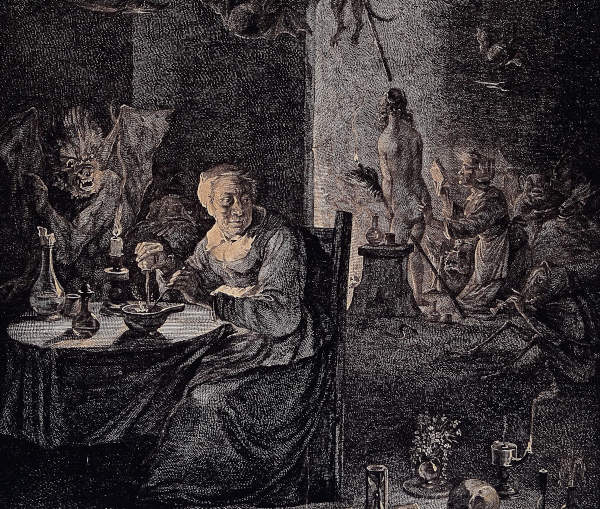
As his worldview expanded, Summers went even further by tying contemporary political movements to supernatural evil. By the 1930s, he equated communism with Satanism, claiming that atheistic ideology merely masked a deeper allegiance to destructive forces.
In his view, the revolutionary impulses of the modern world echoed the same anti-social energies he attributed to witches of the past. This fusion of theology and politics revealed the breadth of his fears and the extent to which he interpreted global events through a spiritual lens. For Summers, diabolical intent was not a relic of history—it was an active and organizing power in modern life.
Rumors, Masks, and the Shadow Life of Montague Summers
Rumors trailed Montague Summers throughout his life, growing as colorful as the man himself. Whispers circulated about Black Masses, clandestine rituals, and occult gatherings allegedly led or attended by him.
Some of these stories came from people who claimed firsthand knowledge, including accounts that he had officiated at a Black Mass early in his adult life. Others were pure speculation, woven from fragments of his behavior and the aura of danger he cultivated.
Summers never confirmed nor denied such tales. Instead, he answered questions with a playful vagueness that only added fuel to the fire.
His theatrical personality made these rumors almost inevitable. Summers loved dramatic clothing, antiquated speech, and rituals steeped in symbolism. He carried himself as though he were a character from the very eras he studied, complete with flowing garments and a carefully crafted air of mystery.
This performative quality encouraged onlookers to imagine hidden depths and secret devotions. Even his friends noted that he seemed to wear a mask, slipping into roles that entertained, unsettled, or puzzled those around him. His fascination with the darker side of religion, combined with his vivid storytelling, blurred the line between authenticity and persona.
That blurring became central to the mythmaking that surrounded him. Summers moved so comfortably between scholarship, performance, and religious identity that it became difficult to determine where one ended and another began. His public stance as a defender against witchcraft contrasted sharply with the rumors that he had once participated in forbidden rites.
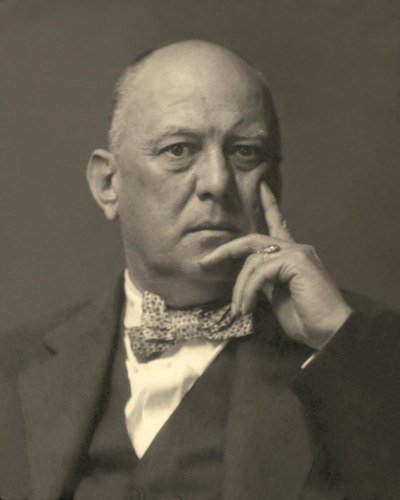
The tension between his condemnations of Satanism and the persistent whispers of his involvement in it fed a narrative that he may have lived a double life. Whether this was grounded in truth or simply a product of his dramatic presence, it contributed to his enduring mystique.
His friendships also played a role in deepening the intrigue. Summers maintained a long-standing relationship with Aleister Crowley, one of the most controversial occult figures of the era. Their connection surprised many, given Summers’ reputation as a witch-hunter and Crowley’s as a practicing magician.
Yet the two men enjoyed each other’s company, exchanged ideas, and even collaborated informally. Their interactions highlighted the contradictions at the heart of Summers’ life. If Crowley represented the “witch,” Summers embodied the “witchfinder,” and their unlikely camaraderie only intensified public fascination with the secrets Summers might have kept hidden.
Check out our recommendations at “Occult Bookshelf” and many free resources at our “Free Library“
Why Scholars Should Revisit Summers Today
Montague Summers continues to hold a quiet but steady presence in the occult community, even though his name rarely appears in academic conversations. His major works on witchcraft, demonology, and vampirism remain in print, finding new audiences with every generation.
Readers drawn to dark folklore or supernatural history often encounter his books on store shelves, unaware of how long they have been circulating. The longevity of his publishing record speaks to a fascination that has never fully faded. His dramatic voice, uncompromising perspective, and archival approach keep his writings relevant to those exploring the occult today.
His influence is especially visible in modern vampire and witchcraft literature. Summers helped revive old vampire lore during a period when it had largely slipped from public consciousness. His books gathered obscure sources, preserved forgotten legends, and presented them in a serious academic tone that lent the material an air of authority.

Many later writers—both scholarly and fictional—drew on these ideas, consciously or not. Even popular culture absorbed elements he brought back into circulation, contributing to the modern image of the vampire as a historical figure rather than a simple monster. The same is true for his work on witchcraft, which introduced readers to a rich repertoire of stories, trial records, and demonological writings that continue to shape the genre.
Yet despite this influence, there is a surprising absence of serious academic attention to Summers himself. Beyond a handful of rare biographies and bibliographic studies, scholars have largely overlooked him. This gap is striking, given his substantial output and his unusual role as both a researcher and a believer in the supernatural. His eccentric life, theatrical persona, and unconventional scholarship present an intriguing opportunity for deeper historical study.
The contrast between his careful editing of Restoration texts and his fervent belief in literal witchcraft offers fertile ground for understanding how intellectual and cultural forces shaped early twentieth-century occultism.
The recent rediscovery of Summers’ private papers opens the door to new insight. These documents, long thought lost, include correspondences and manuscripts that could clarify unanswered questions about his life, beliefs, and relationships. They may shed light on his halted ordination, his private associations, and the evolution of his views on the supernatural.
For researchers interested in the history of occult literature or the cultural imagination surrounding witchcraft, these papers offer a rare chance to reassess a figure who has lingered on the margins of scholarship for far too long.
Related reading: Shadows of the Night: The Evolution of Lilith in Early Modern Literature – Opens in new tab
A Legacy Wrapped in Ritual, Scholarship, and Enigma
Montague Summers crafted a persona that blended actor, critic, and something like a self-made magician. His life was shaped as much by performance as by scholarship, and he moved through the world with a deliberate sense of drama. He adopted clerical robes without official ordination, embraced archaic fashion, and wrote with the confidence of someone who fully inhabited the roles he created for himself.
His scholarship on Restoration drama displayed remarkable precision, while his writings on witchcraft and demonology revealed a mind captivated by the theatrical possibilities of fear and belief. Through it all, he projected an image that seemed half historical figure, half character from his own favorite texts—a man as committed to style as he was to substance.
This dual nature gave Summers an unusual allure. He lived at the intersection of scholarship, performance, and occult imagination, slipping between these worlds with ease. To some, he appeared as a devoted Catholic and literary scholar; to others, a mysterious figure haunted by rumors of arcane rites.
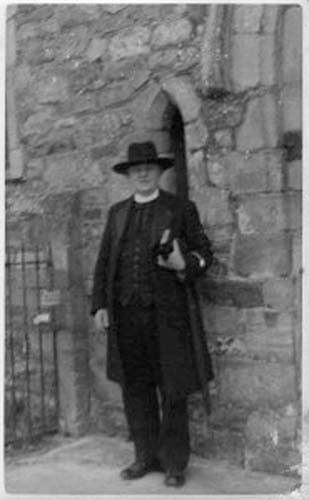
His friendships with poets, his rumored participation in forbidden ceremonies, and his friendships with figures like Aleister Crowley created an aura of ambiguity that defied easy categorization. Summers made himself into a figure who never fully belonged to any single world, and that liminal quality remains one of the most compelling aspects of his legacy.
His life continues to resonate because it embodies the rich complexity of early twentieth-century occult culture. Readers today find him captivating precisely because he was so strange, so theatrical, and so unapologetically committed to his beliefs. He wrote at a crossroads where academic research and supernatural conviction met, offering a perspective unlike anyone else of his time.
Even now, his works are read not only for their content but for the singular voice behind them—a voice steeped in ritual, imagination, and mystery. Summers reminds modern audiences that history is often shaped by those who sit just outside the mainstream, crafting their own myths as they follow their obsessions into the shadows.
Source: Winchester, Jake. Witch Hunter or Witch? – The Life and Influence of “Reverend” Montague Summers.
Stay in Touch
 Join our newsletter by using the forms on this website or click here!
- Follow us on Google News
- Follow us on Facebook